How To Build a Worm Tower

We’ve gotten a lot of traffic for our worm towers so we thought we’d feature them on this page by themselves. Worm towers are one of many techniques that permaculturists might use but knowing when and where it is really appropriate requires a broader understanding that permaculture, it’s ethics, and principles provide.

If you’re looking for the picture summary for our  Permaculture training you can find it here.

Last year during our Hands-on Permaculture training we built worm towers with the class and installed one in Bill and  Becky’s front yard. Once it’s installed all you have to do is add composting (red wigglers) and then occasionally add some table scraps. The feed on the food waste and in turn, fertilize the bed.  No muss or fuss with kitchen scraps anymore, it is so incredibly easy to use.  The only maintenance that’s needed is to clean out worm castings once a year to make room for more .

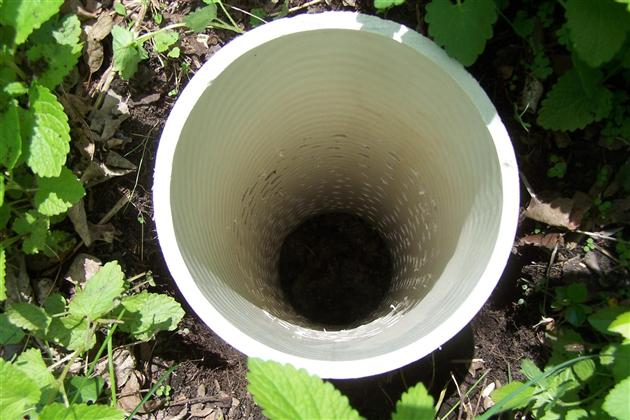
View inside the installed Worm Tower before it’s filled with worms, food, and bedding.


If you’d like to make your own we’ve made an instruction sheet to help you out.

Continue reading

What A Difference A Path Makes – Before & After


Before

As I am doing my year-end clean-up and organizing of my computer files, I came across these two of our front yard (Midwest Permaculture – Bill and Becky Wilson). Here is how the yard looked the spring following the digging of the rain gardens which we did in late October.


After

And here it is in June after we dug in the and covered them and the raised beds (our keyhole gardens) with shredded hardwood bark mulch. The mulch gives the yard a more finished look while also helping to hold in moisture and add organic matter to the soil. Because this is the front yard we felt it was important for it to look more ‘landscaped’ being located in a suburban setting. If we are going to help mainstream to see the value of permaculture, we will have to make it look nice as well as be functional & productive. 

Becky and I are strong advocates of making pathways a priority as well. They not only make it easier to get around the yard but they really help define space which helps the mind to organize what to do where. 

The plants in the foreground are sweet potatoes. The vines grew all the way down into the rain gardens and whenever it rained and they filled with water, the vines would float on the surface like water lilies. It was lovely.

Becky and I would like to wish you all a wonderful holiday season. We look forward to sharing much with you in 2012.

All the best…. Bill Wilson


Hugelkultur Video

Check out this time lapse video we made of the construction of a bed…

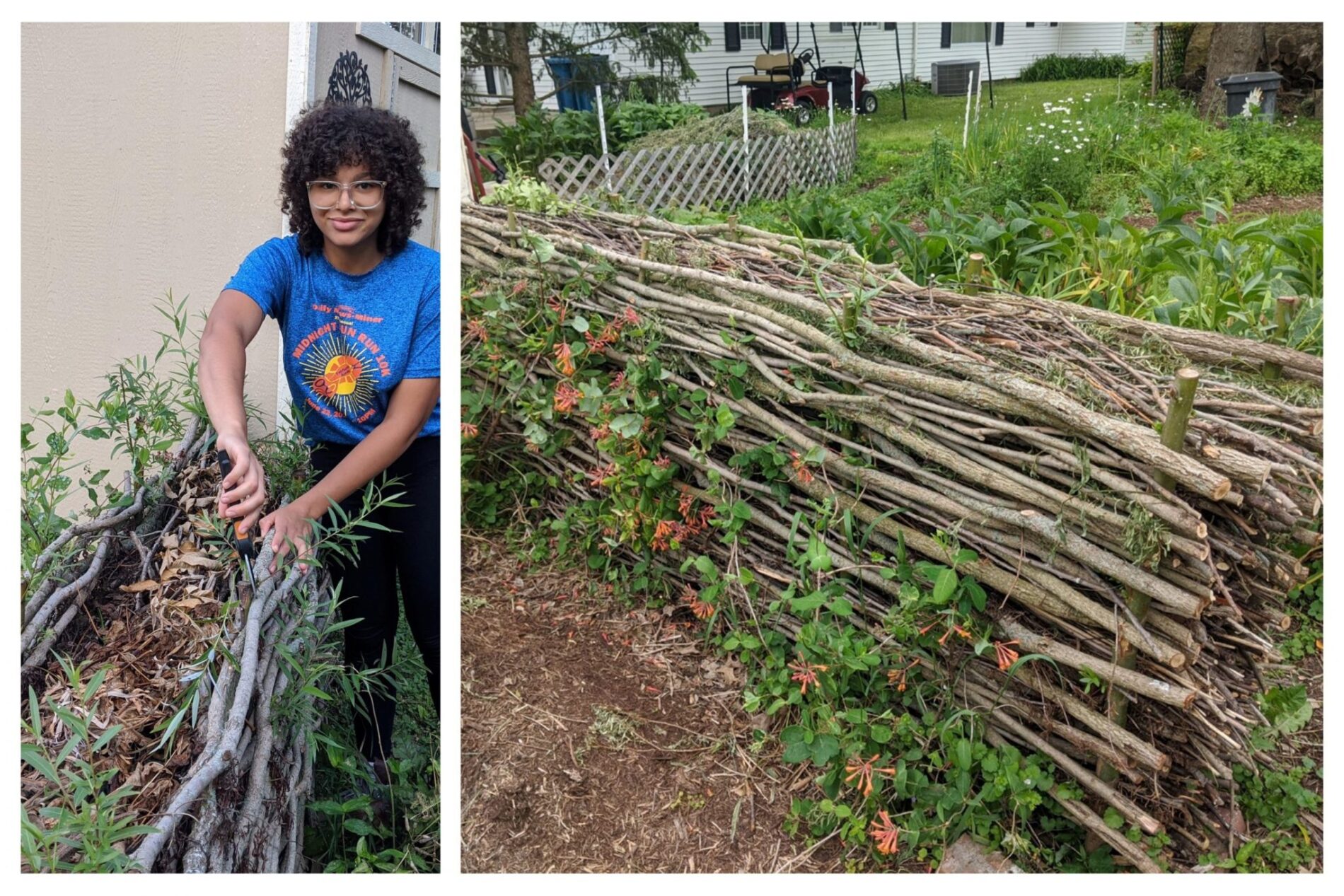
Hugelkultur is a filled with wood. As the wood decomposes it slowly releases nutrients to the plants in the bed. It also acts like a sponge, holding more water for the plants to access in between rains. We built this bed in Bill & Becky Wilson’s yard as a part of our Hands-On Permaculture Training this past August. 

Fall Freeze

Our first freeze is soon to be here so it’s decision making time for Becky and me… what to protect, what to consolidate and possibly replant, and what to let go of.

These tomato plants (left) grew to over 6 foot high and have produced very well. They are located on a berm that is fed water from the rooftop, 2 rain gardens and a . We hardly watered except to get them established early in the year. Rather than protecting the plant from frost we will go ahead and all of these green tomatoes and enjoy them over the next month as they slowly ripen, turning red, in a box in our home.


Here is some more of our harvest in a holding area near our back door. Our permaculture students coming to in a week for a their training will enjoy a majority of their meals from local gardens and farms.

Fall Update

The dust has settled following our full schedule of trainings in August. It feels good to be home and to be getting into the while starting to think about the upcoming winter season.


Becky made some fresh salads from our gardens including pickled beans, tomatoes, nasturtium flowers and fresh sauerkraut.
Yesterday we had two cords of oak delivered for our winter needs. I have cut and split our wood many times and believe me, it is a real blessing (and a bargain) to purchase the finished product.  

Invasive and Delicious

This Spring, I’ve discovered a new plant growing in profusion in our . I noticed it last year, but it was just a small mound. This year, it quickly grew tall and flowered. Before I had a chance to look it up, Milton stopped by and said that it was Garlic Mustard, and it makes great pesto! Sure enough – it was wonderful, with both flavors in abundance. Use the leaves just as you would basil. We picked lots of it before it went to seed, as it can be quite invasive; and we’ve enjoyed it several weeks before our basil will make a showing. Let’s hear it for free food!

425 Gallon Rain Tank

Permaculture Ideals:  - Hold water where it falls.
– Slow it down.    - Use it as much as possible.

Constructed Summer 2007


1.

Every time there is an inch
(1 inch) of rain, there are 1,248 gallons of water coming off the roof of our 2,000 sq/ft ranch-style home.

2/3rds of the water drains off the front of our home (now captured by our rain gardens in the front yard) and 1/3 off the back.

During the growing season, all of the water from the back of the our home flows through this tank first.

We started with a 55-gallon drum but when it filled in about the first 3 minutes of a good rain, we knew we wanted something much bigger.


  Continue reading

Front Yard Rain Garden and Berm

We thought it might be interesting to the visitors of our website to see how we progressed as we have been applying permaculture design principles and ideas to our property.  Wish us luck.  This is an ongoing process…!!!     –Bill & Becky Wilson

A Permaculture Ideal:  Hold the water where it falls…

-Creating the Rain Gardens-
The first project we decided to undertake was the transformation of our front yard into a beautiful, but fully productive .  We want to create something that looks good, feels even better to be in, while at the same time, producing food and herbs for our own consumption. 

Our first task: to find a way to hold the thousands of gallons of water that roll off our roof when it rains and find a way to hold it on the property.

The answer:
Rain gardens and swales.

Our students at our fall 2007 permaculture design course volunteered to help us do the digging.  We marked out where we wanted our rain gardens to be with these little flags.  A garden hose works too.

  Continue reading

Our Permaculture Rain Gardens

After 10 weeks of dry weather, a great rain soaked our parched yard in early September. I ran outside with my video camera to see how our rain gardens were dealing with the large cracks that had appeared in our bone-dry soil. This short 2.5-minute video will show cracks that you can slide your hand in to, fill with rain water during a downpour. 

Just click here or on picture to view the video.